How grease traps work and why they need regular service
A grease trap sits between a kitchen's drain lines and the sewer or septic system. Hot water carrying fats, oils, and grease flows into the trap, where it cools. As the water cools, the grease floats to the top and the heavier food particles settle to the bottom. The relatively clean water in the middle flows out to the sewer. Over time the grease layer thickens and the solids layer rises until the trap can no longer separate effectively, and grease starts passing through into the downstream piping.
The consequences of a neglected grease trap show up in two places. Inside the building, drains slow down and back up, and the kitchen starts smelling like rancid fat. Outside, grease reaching the sewer system or a septic drain field coats the pipes and the soil, creating blockages that are expensive to clear. Municipalities and health departments set pumping schedules for commercial kitchens for exactly this reason.
Pumping is straightforward: the pump truck removes the full contents of the trap, including the grease cap, the water, and the settled solids. The technician checks the baffles and the inlet and outlet fittings for wear while the trap is empty. Residential grease traps are smaller and less regulated but follow the same principle and benefit from the same maintenance.
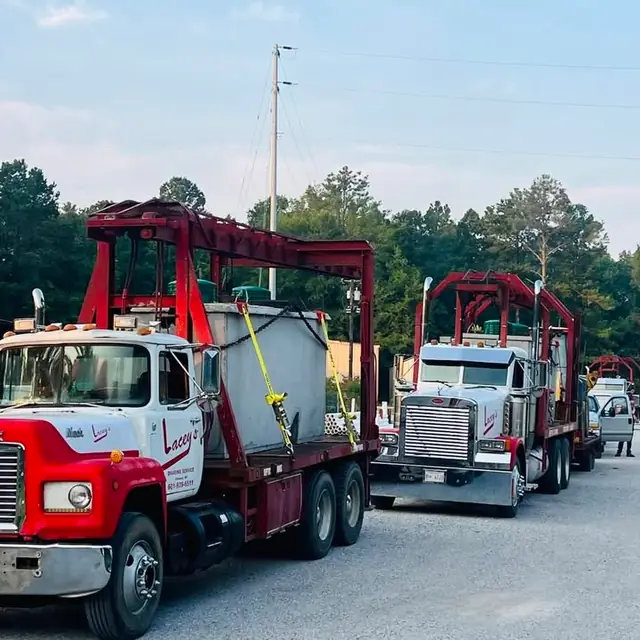
Lacey's Digging Services handles grease trap pumping for both commercial and residential clients across Flowood and Rankin County. The team can set up a recurring schedule so the trap gets serviced before problems start.